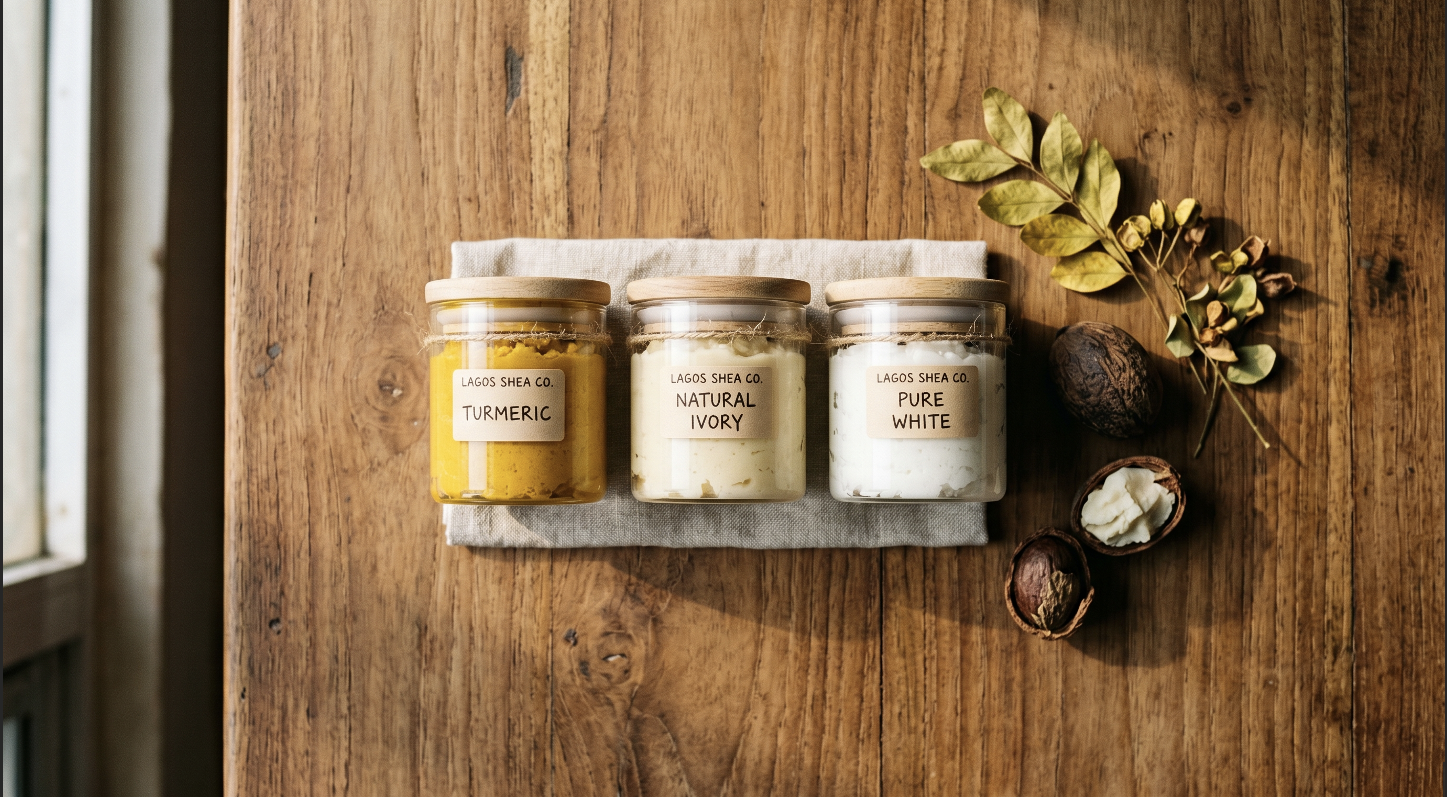
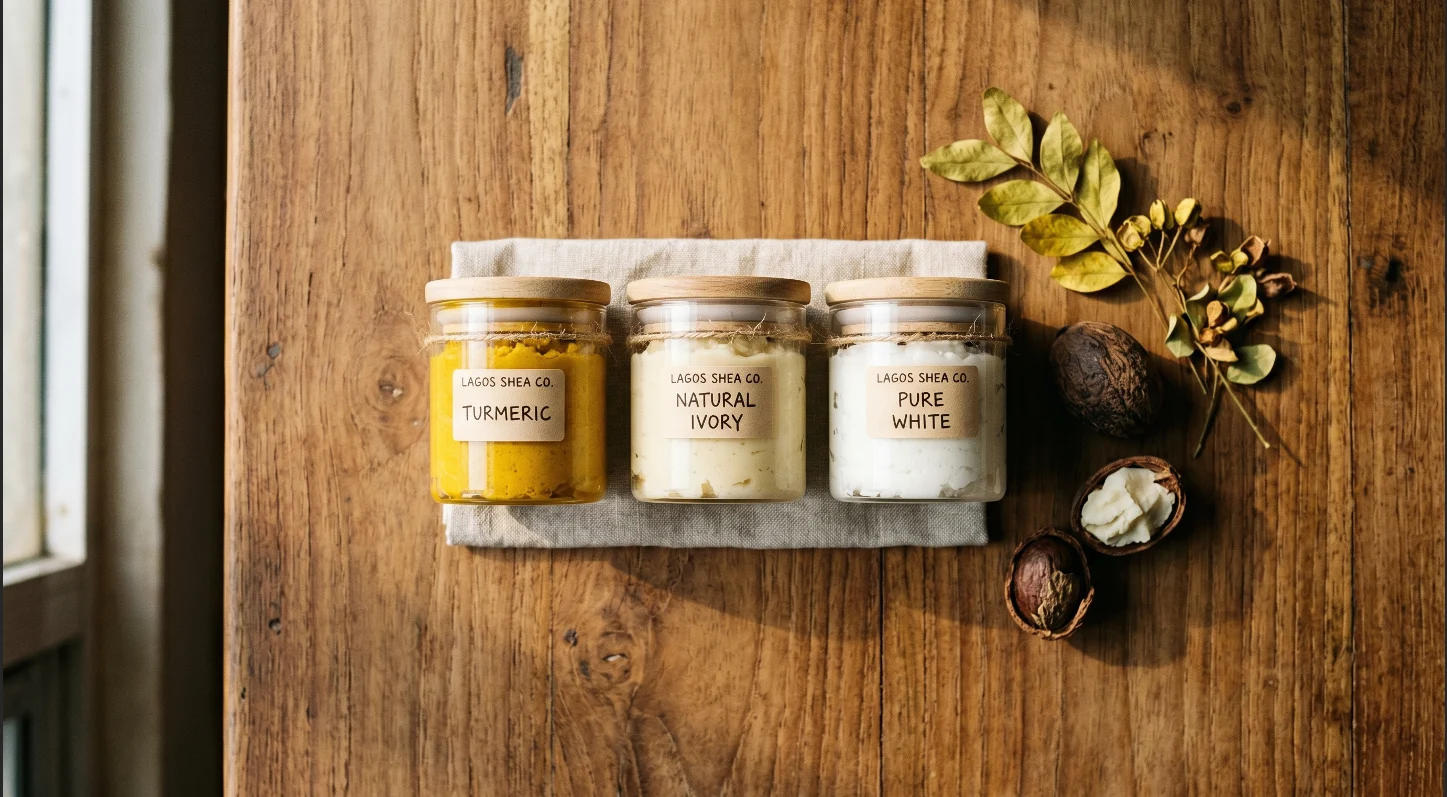
Yellow. Ivory. White. One is medicine. One is cosmetic. One is stripped. They are all called shea butter. But they are not the same thing and the colour in the jar will tell you everything, if you know how to look.
Whether you make skincare products or buy them, this is the one piece of knowledge that changes how you see every jar on the shelf.
A Quick Lesson in Colour
Raw shea butter, the kind extracted the traditional way, by hand, from the nut of the shea tree has colour. That pale yellow, that deep ivory, sometimes even a hint of green or grey depending on the region and season of harvest, that is not a flaw. That is the butter telling you it has been through nothing except the hands that made it.
The whiter the butter, the more it has been processed. Refining involves high heat, sometimes chemicals like hexane, bleaching, and deodorising. What comes out is consistent, odourless, and bright white, and stripped of a significant portion of the vitamins, fatty acids, and healing compounds that make shea butter worth talking about in the first place.According to the American Shea Butter Institute, the refining process can strip away up to 75% or more of the bioactive ingredients with ultra-refined shea butter retaining the least amount of its important nutrients.
That is the story the colour is telling. Now let us meet the three jars.
The Three Jars
The Yellow Jar - Raw, Unrefined (Grade A)
This is shea in its most honest form. Packed with Vitamin A, Vitamin E, fatty acids, and the natural compounds responsible for its skin-healing and anti-inflammatory properties. It smells nutty and earthy, distinctly African. The texture is thick and slightly grainy, melting instantly on contact with skin. This is the medicine jar. If you are buying shea butter for its therapeutic benefits, this is the one.
The Ivory Jar - Lightly Filtered (Grade B)
The middle ground. Lightly filtered to remove impurities and standardise the texture, but without the aggressive processing of full refining. Most of the good stuff is still in there. The scent is milder, the colour more uniform, making it popular for blended skincare products and formulations where a softer base is needed. A good honest option for creators who need consistency without sacrificing integrity.
The White Jar - Refined, Cosmetic Grade
Bright white, completely odourless, smooth as a dream. This is the version inside most commercial lotions and lip balms. It is not bad, it is just a different product. It has been designed for consistency and longevity in large-scale formulations, not for the skin-healing benefits of its raw counterpart. The problem arises when it is sold or labelled as though it were the same thing. It is not.
If You Make Products
Knowing your grade is not a technical detail, it is your story. Here is what to do with it:
Know your grade. Ask your supplier directly. If they cannot tell you clearly, keep looking.
Label honestly. If it is raw, say raw. Words like “pure” and “natural” without specifics are not the same thing.
Tell the origin. Shea from northern Ghana differs from shea from Nigeria or Burkina Faso. That specificity is a selling point, not a complication.
Price accordingly. Raw, traditionally extracted shea is labour-intensive to produce. Do not price it like the factory version.
If You Buy Products
Next time you pick up a jar, run this quick check:
Look at the colour. Brilliant white with no variation is a sign of refinement. Yellow or ivory with natural variation means something much closer to the source.
Smell it. No scent at all means it has been deodorised. Raw shea has a warm, nutty smell. Distinctive, not unpleasant.
Read the label carefully. Look for “unrefined” or “traditionally extracted.” Be cautious of vague terms like “pure” without further detail.
Question very low prices. Raw shea is made by hand. If it is priced like it came off a factory line, ask why.
That Yellow Is the Whole Point
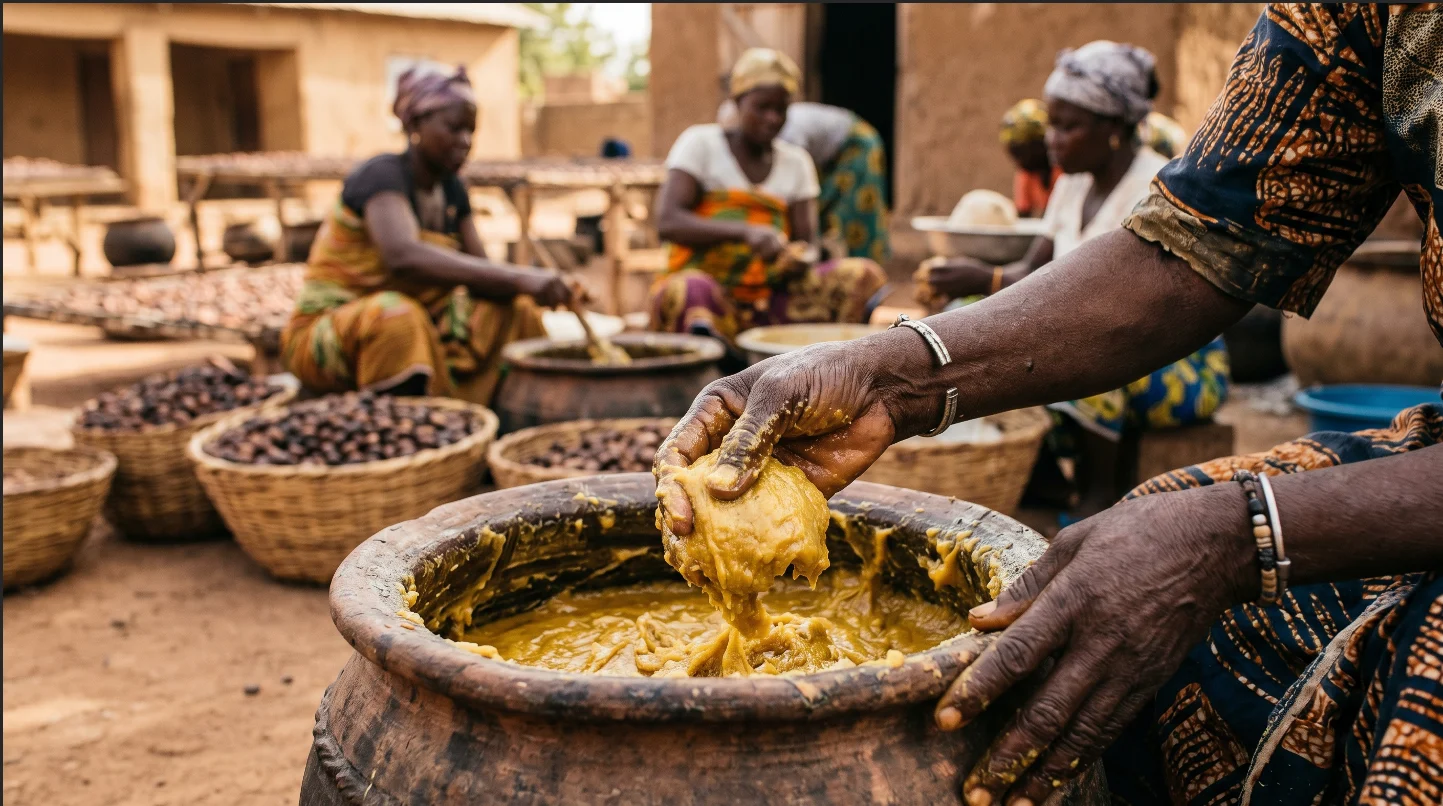
Shea butter has been at the heart of African skincare, nutrition, and trade for centuries. The women who produce it, particularly across the shea belt of West Africa have mastered an extraction process that no laboratory has managed to improve on. When you buy raw shea from an African creator, you are buying that practice. That knowledge. That supply chain.
The colour in the jar is not an imperfection. It is the proof.
And yet, too often the creators holding that proof struggle to be seen. The African skincare founder who knows exactly where her shea comes from. The small-batch producer who cold-presses with care and can trace every ingredient back to its source. The artisan brand telling a true, specific, culturally rooted story competing in a market built around the generic and the convenient.
That gap between having a brilliant product and having the infrastructure to scale it, position it, and get it in front of the right people. This is exactly the problem MadeIn! was built to fix!
MadeIn! is a brand incubation platform for African consumer products. We work with creators who have the product, the knowledge, and the integrity, and we give them the commercial foundation to grow. Where a creator's story includes their sourcing, their values, or their relationship with the communities behind their ingredients, we help them build that into their brand positioning. Because that specificity is not a footnote. It is often the most powerful thing they have.
Because the story of African-made is not a niche interest. It is a market waiting to be properly served.
The Curator's Eye is a MadeIn! series exploring the ingredients, products, and practices behind African consumer goods, so that creators can tell their story with confidence, and buyers can make choices that mean something. Look out for our next edition!